Bring in the guest feedback
Replio supports Google and Yelp reviews. DoorDash and Uber Eats feedback comes from merchant-report imports. This tour focuses on the follow-through after an issue is identified.
For owner-led restaurant groups
See who owns the next step, what they did, and who checked it. Explore five examples of how Replio keeps follow-through visible at your restaurants.
01 / Issue ready for action
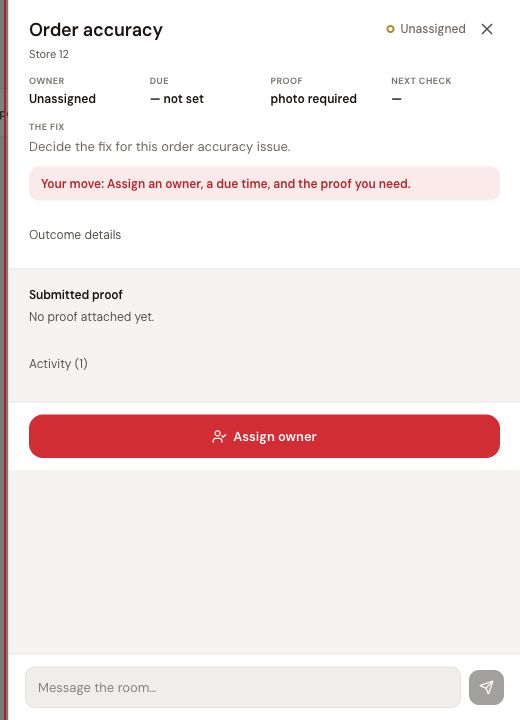
Order accuracy needs attention at Store 12. The Action Room gives the owner a place to decide what should happen next.
02 / Responsibility made visible
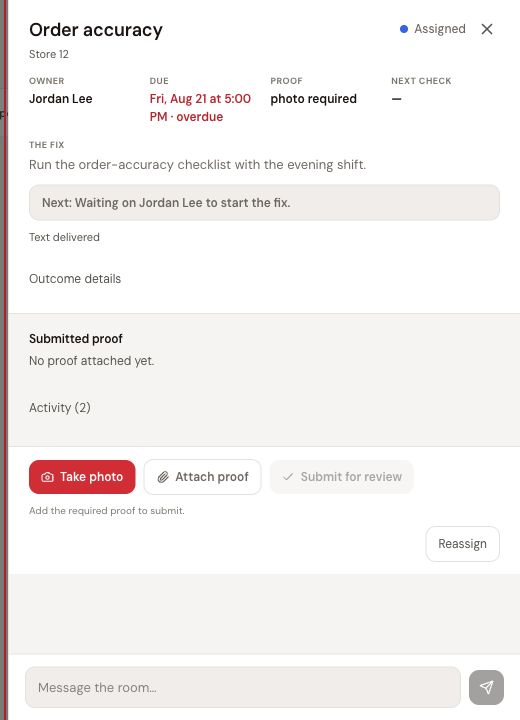
In this assigned example, an owner or eligible leader gives Jordan a specific instruction: run the order-accuracy checklist with the evening shift. The assignment includes a due time and required evidence.
03 / Work in progress
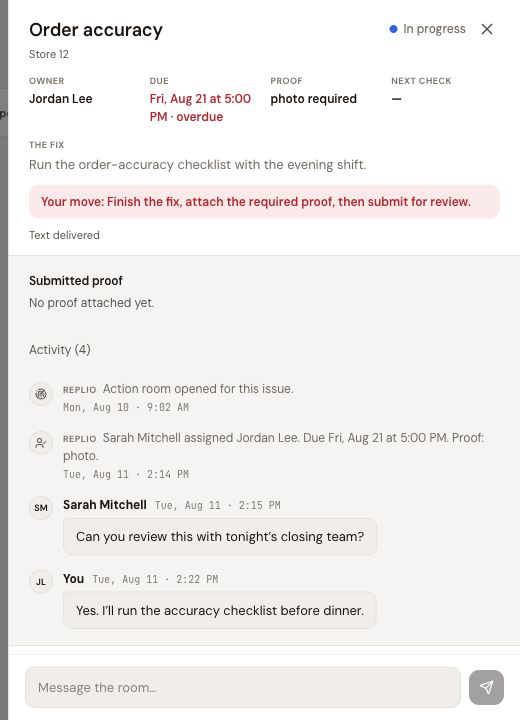
In this in-progress example, Jordan's update sits in the same room as the instruction and assignment. The owner can see the conversation without rebuilding the story across separate messages.
04 / Ready for verification
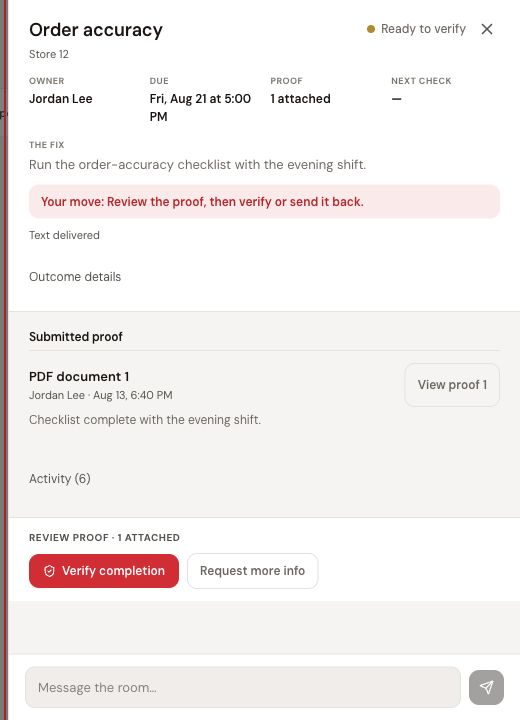
This verification example shows submitted evidence and an assignment marked complete. An eligible leader reviews what came back, then verifies completion or asks for more information.
05 / Verified work
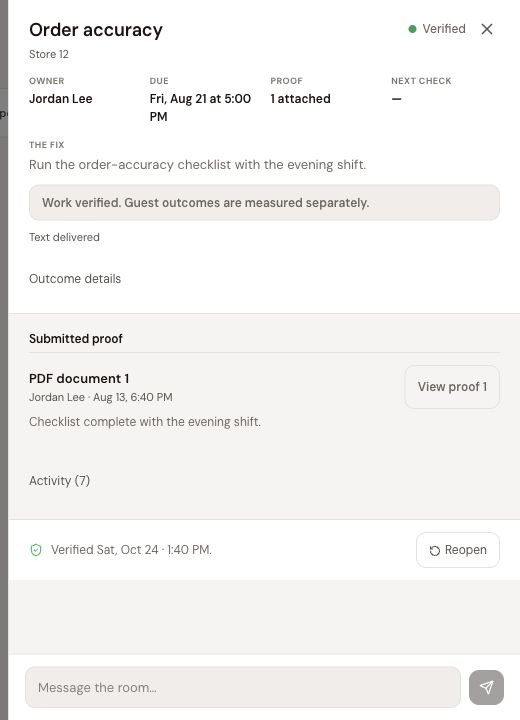
This verified example shows that the work was reviewed. It does not prove that order-accuracy complaints fell. Later guest feedback needs a separate assessment.
1 of 5 · Use arrow keys on step buttons
Where this fits
Replio supports Google and Yelp reviews. DoorDash and Uber Eats feedback comes from merchant-report imports. This tour focuses on the follow-through after an issue is identified.
Your team reviews reply drafts before publication. Posting options depend on the location connection. Replying to a review and completing an operational fix are separate pieces of work.
The full Replio plan includes Rex, the dashboard, assigned follow-ups and completion records. Text-only Rex is a separate plan without the dashboard. Compare the plans.
A completed checklist tells you what the team did. It does not prove complaints decreased. Assess later guest feedback separately to understand whether the guest experience improved.
For an owner-led restaurant group, follow-through means knowing who owns the fix, what they did and whether someone checked it. These five separate examples use fictional data in the actual Replio interface.
The first example shows an order-accuracy issue at Store 12, before an owner is assigned. The Action Room gives a leader a place to turn an identified concern into specific work.
The assigned example shows Jordan responsible for running the order-accuracy checklist with the evening shift. The instruction, due time and required evidence sit together. Assignment depends on team roles and location permissions.
The in-progress example shows the conversation between Sarah and Jordan beside the assignment. The next person can see the instruction and updates in the same room.
The pending-verification example shows submitted evidence awaiting a leader's review. An eligible leader can verify completion or send the work back. Marking work complete and verifying it are separate steps.
The verified example shows a record that the work was reviewed. Whether order-accuracy complaints fell requires a separate assessment of later guest feedback.
Actions and delivery shown in these examples are simulated. These screenshots do not document a live customer result.
Bring guest feedback, named responsibility and a record of follow-through together for your restaurant group.